
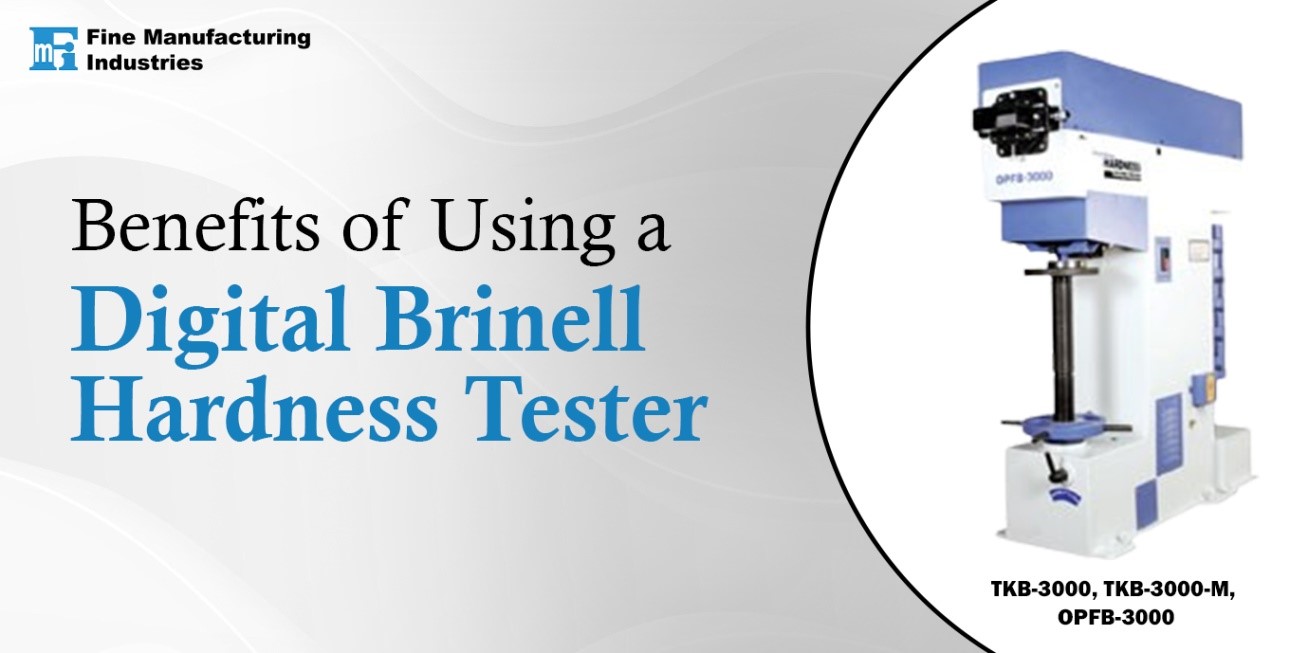
Benefits of Using a Digital Brinell Hardness Tester
In modern manufacturing and material testing industries, hardness testing plays a critical role in ensuring product quality and durability. Among the various hardness testing methods, the Brinell hardness tester remains one of the most reliable techniques for measuring the hardness of metals and alloys.
With advancements in technology, traditional Brinell testers have evolved into digital Brinell hardness testers, offering improved accuracy, speed, and efficiency. Industries today increasingly prefer digital systems to meet strict quality control standards.
This article explains the key benefits of using a digital Brinell hardness tester and why industries are upgrading to digital solutions.
What is a Digital Brinell Hardness Tester?
A digital Brinell hardness tester measures material hardness by pressing a hardened steel or carbide ball into the surface under a specified load. The indentation diameter is then measured digitally, and the hardness value is automatically calculated.
Unlike manual testers, digital versions use electronic measurement systems and automated calculations, reducing human error and improving productivity.
Major Benefits of Digital Brinell Hardness Tester
1. High Measurement Accuracy
Digital Brinell testers use advanced optical or electronic systems to measure indentation precisely.
Benefits include:- Elimination of manual measurement errors
- Consistent test results
- Better quality control
- Reliable hardness values
This accuracy is critical in industries where product failure can lead to heavy losses.
2. Faster Testing Process
Manual measurement requires operator effort and time. Digital systems automate the process, providing results instantly.
Advantages:- Reduced testing time
- Higher productivity
- Faster inspection cycles
- Efficient quality control workflow
- No manual calculation mistakes
- Faster reporting
- Consistent results
- Easy data storage
- Data saving for quality audits
- Easy report generation
- USB or software connectivity
- Integration with quality management systems
- Touchscreen or digital display
- Guided test procedures
- Minimal operator training needed
- Reduced operator fatigue
- Consistent testing standards
- Repeatable results
- Reduced inspection errors
- Improved product reliability
- Automotive manufacturing
- Steel plants
- Foundries
- Heavy engineering industries
- Construction equipment manufacturers
- Detection of improper heat treatment
- Quality assurance
- Reduced product failure risk
- Compliance with international standards
- Reduced rework and rejection
- Faster testing
- Less operator dependency
- Improved productivity
- ASTM standards
- ISO standards
- Industrial quality guidelines
- Steel and metal industries
- Automotive manufacturing
- Aerospace components
- Heavy machinery production
- Forging and casting industries
- Research laboratories
- Quality inspection departments
This is especially useful in high-volume production environments.
3. Automatic Hardness Calculation
In manual testers, operators calculate hardness values using formulas or charts. Digital testers automatically compute the Brinell Hardness Number (BHN).
Benefits include:Automation saves time and improves operational efficiency.
4. Data Storage and Reporting
Modern digital testers allow storage and export of test results.
Key benefits:Industries can maintain proper testing records for compliance and documentation.
5. User-Friendly Operation
Digital testers are designed with easy-to-use interfaces.
Advantages:This makes them suitable even for operators with limited technical expertise.
6. Reduced Human Error
Manual measurement and calculations often lead to inconsistent results. Digital systems minimize operator involvement.
Benefits include:Automation improves testing confidence.
7. Suitable for Heavy and Large Components
The Brinell method is ideal for testing castings, forgings, and heavy materials. Digital testers further enhance testing performance for large industrial components.
Industries benefiting include:8. Improved Quality Control
Accurate hardness testing ensures products meet industry standards.
Benefits:Digital systems help manufacturers maintain high product quality.
9. Cost Efficiency in Long Term
Although digital machines may have higher initial cost, they save money in the long run.
Savings come from:This makes digital Brinell testers a smart long-term investment.
10. Compliance with Global Standards
Digital Brinell testers comply with international testing standards such as:
Benefits include:Compliance ensures global acceptance of products.
Industries Using Digital Brinell Hardness Testers
Digital Brinell testers are widely used in:
Conclusion
The digital Brinell hardness tester has become an essential tool in modern quality control processes. Its advantages—accuracy, speed, automation, and data management—make it far superior to traditional manual testing methods.
Industries aiming to improve testing reliability and production efficiency should consider upgrading to digital Brinell hardness testing systems. Investing in digital technology ensures better quality control, reduced errors, and long-term cost savings.
Contact Us – Brinell Hardness Tester
Looking for a reliable Brinell Hardness Tester? Contact Fine Manufacturing for high-quality testing machines, expert guidance, and competitive pricing.
Fine Manufacturing — Your trusted partner for hardness testing solutions.
FAQs – Brinell Hardness Tester
It is used to measure the hardness of metals and alloys, especially castings and forged components.
Materials like steel, cast iron, aluminum alloys, brass, and other heavy metals can be tested.
Because it works well on rough or uneven surfaces and large industrial parts.
BHN (Brinell Hardness Number) is the hardness value calculated from the indentation size.
Yes, digital testers provide faster, more accurate results and automatic calculations.
Steel plants, automotive industries, foundries, heavy engineering, and manufacturing units commonly use them.