
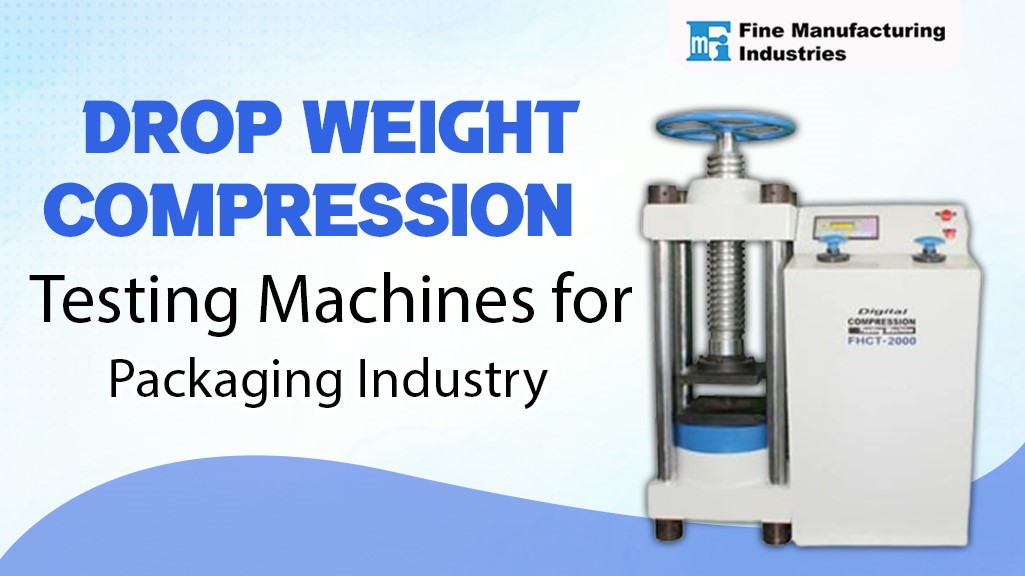
In the packaging industry, ensuring product safety during handling, transportation, and storage is critical. Packaging materials must withstand impact, pressure, and rough handling without compromising the product inside. This is where the Drop Weight Compression Testing Machine plays a vital role.
These machines are designed to evaluate the strength, durability, and impact resistance of packaging materials by simulating real-world conditions. In this blog, we explore how drop weight compression testing machines are used in the packaging industry and why they are essential for quality control.
What Is a Drop Weight Compression Testing Machine?
A Drop Weight Compression Testing Machine is a specialized device used to evaluate how packaging materials respond to sudden impact and compressive forces. The machine operates by dropping a specified weight from a predetermined height onto a test sample.
This method helps determine the material’s ability to absorb shock and resist damage, making it an essential tool in modern packaging design and quality testing.
Importance in the Packaging Industry
In today’s logistics-driven world, packaging plays a critical role in protecting products during transportation and handling. Materials such as corrugated boxes, plastic containers, and protective packaging must withstand external forces without failing.
Using a drop weight compression testing machine enables manufacturers to:
- • Ensure product safety during shipping and handling
- • Minimize damage-related losses
- • Comply with industry quality standards
- • Enhance packaging design and durability
How the Machine Works
The testing procedure follows a systematic approach:
- • The packaging sample is placed securely on the testing platform
- • A specified weight is raised to a defined height
- • The weight is released to create impact on the sample
- • The resulting deformation, damage, or failure point is recorded
This process simulates real-world scenarios such as dropping, stacking, and mechanical impact during transportation and logistics operations.
Key Features of Drop Weight Compression Testing Machines
1. Adjustable Drop Height
Allows users to simulate different impact conditions, making the testing process more versatile and realistic.
2. Controlled Impact Force
Ensures precise and repeatable test results, which are essential for consistent quality evaluation.
3. Robust Construction
Designed with durable materials to withstand frequent use in demanding industrial environments.
4. User-Friendly Operation
Equipped with intuitive controls and digital interfaces for ease of use and efficient testing.
5. High Data Accuracy
Provides reliable and precise measurements to support detailed analysis and continuous improvement.
Benefits for the Packaging Industry
1. Improved Packaging Quality
Helps identify structural weaknesses, enabling manufacturers to enhance packaging strength and performance.
2. Reduced Product Damage
Strong and tested packaging significantly lowers the risk of product damage during transit.
3. Cost Efficiency
Minimizing damage reduces returns, replacements, and associated financial losses.
4. Compliance with Standards
Ensures packaging materials meet national and international quality and safety regulations.
5. Enhanced Customer Satisfaction
Reliable packaging ensures products reach customers in perfect condition, strengthening brand trust.
Applications in the Packaging Industry
- Corrugated Box Testing: Evaluates the strength and durability of shipping cartons
- Plastic Packaging Testing: Assesses impact resistance of bottles, containers, and plastic materials
- Protective Packaging Evaluation: Tests cushioning materials such as foam, bubble wrap, and molded pulp
- E-commerce Packaging: Ensures packaging can withstand rough handling during courier and logistics processes
Factors to Consider When Choosing a Testing Machine
- • Maximum drop height and load capacity
- • Type of packaging material to be tested
- • Required testing standards and compliance needs
- • Automation and data recording capabilities
- • Machine durability and maintenance requirements
Selecting the right machine is crucial for achieving accurate results and long-term operational efficiency.
Future Trends in Packaging Testing
With the rapid growth of e-commerce and global supply chains, packaging testing technologies are continuously evolving. Key trends include:
- • Automation and advanced testing systems
- • Smart data analysis and digital reporting
- • Integration with quality control systems
- • Focus on sustainable and eco-friendly packaging solutions
These advancements help manufacturers improve efficiency and meet evolving industry demands.
Conclusion
The Drop Weight Compression Testing Machine is a vital tool for ensuring packaging strength, durability, and reliability. By investing in proper testing equipment, manufacturers can enhance product protection, reduce losses, and maintain high customer satisfaction.
As the demand for safe and durable packaging continues to grow, drop weight compression testing machines will remain a key component of modern quality assurance systems.