
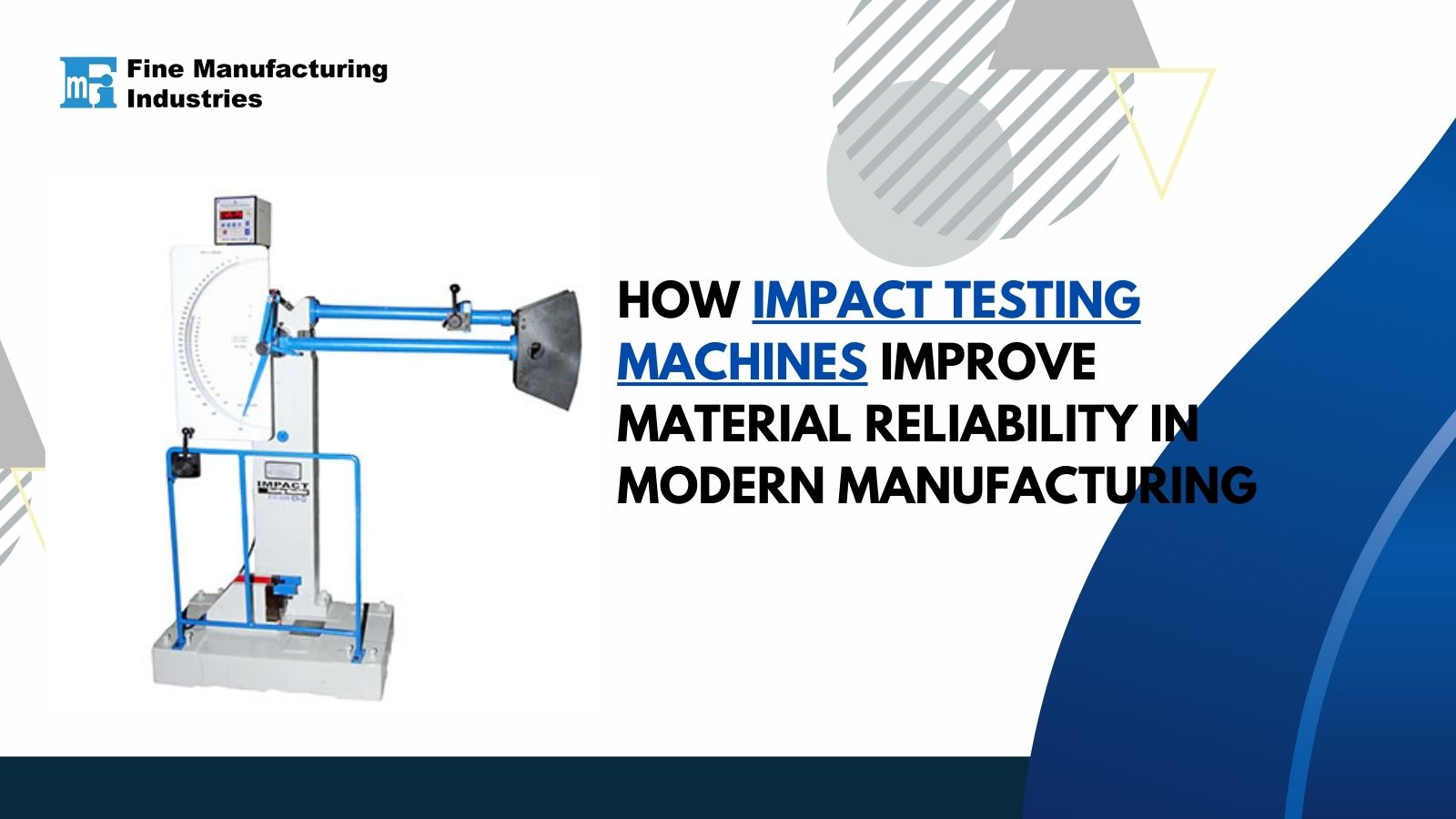
How Impact Testing Machines Improve Material Reliability in Modern Manufacturing
In today’s fast-paced industrial environment, the demand for stronger, safer, and more reliable materials has never been higher. From automotive components and aerospace structures to construction materials and industrial tools — every product must withstand real-world forces without failure. This is where impact testing machine play a vital role. They help manufacturers analyse how materials behave under sudden loads, ensuring superior performance, safety, and durability.
Impact testing is more than just a quality check; it is a fundamental part of modern material engineering. By understanding how materials absorb energy and resist fracture, industries can design products that last longer, perform better, and comply with global standards. Let’s explore how Impact Testing Machines improve material reliability in modern manufacturing and why they are essential for quality-driven industries.
1. Understanding Material Toughness through Impact Energy
Every material reacts differently under stress. Some bend, some crack, and others break almost instantly. Impact Testing Machines measure impact toughness, which tells engineers how much energy a material can absorb before failing.
This data is crucial for industries where components face dynamic loads, such as:
- • Automotive crash-prone areas
- • Railway components
- • Industrial machinery
- • Construction tools
- • Aerospace parts exposed to vibration and shock
By analysing impact energy, manufacturers can choose the right materials for the right applications and avoid premature failures.
2. Ensuring Product Safety & Compliance With International Standards
Safety regulations around the world require materials to meet strict performance benchmarks. Impact Testing Machines help manufacturers comply with standards like:
- • ASTM E23
- • ISO 148-1
- • EN 10045
Compliance not only ensures higher safety but also supports export opportunities across global markets. A certified product automatically gains customer trust and reduces liability risks.
3. Reducing Material Failures in Real-World Conditions
Material failure in industries like automotive, aerospace, or construction can lead to:
- • Costly downtime
- • Equipment damage
- • Safety hazards
- • Financial losses
Impact testing helps manufacturers predict how materials will behave under harsh or sudden conditions such as:
- • Impact during transportation
- • Sudden shocks during machine operation
- • Low-temperature brittleness
- • Fatigue-induced cracking
By identifying weaknesses early, manufacturers can strengthen their designs and improve overall product reliability.
4. Supporting Research, Innovation & New Material Development
As industries evolve, so do materials. Today’s manufacturing heavily depends on:
- • Advanced alloys
- • Composite materials
- • High-performance polymers
- • Heat-treated metals
Impact Testing Machines are essential tools for labs and R&D centers. They help scientists understand how new materials react under impact and optimize their composition for better strength and toughness.
This fuels innovation in fields like:
- • Electric vehicles
- • Aerospace engineering
- • Renewable energy
- • Robotics and automation
- • Defence & military applications
Without impact testing, developing new, more reliable materials would be nearly impossible.
5. Improving Quality Control across Manufacturing Lines
Impact testing is an integral part of quality control. It ensures:
- • Each batch meets the required specifications
- • Consistency in material properties
- • Zero-defect manufacturing
- • Long-term product reliability
Manufacturers routinely test samples from production lots to verify that every material used in production performs as expected. This reduces rejections, improves yield, and enhances the company’s market reputation.
6. Enhancing Performance of Critical Components
Many industries depend on components that must not fail even under extreme conditions. Impact testing ensures that critical parts can handle real-world scenarios without damage.
Industries that rely heavily on impact-tested materials include:
- • Oil & gas (pipes, valves, connectors)
- • Heavy engineering (shafts, gears, castings)
- • Marine (propellers, hull reinforcements)
- • Mining & construction equipment
Using impact-tested materials boosts product reliability and extends equipment life.
7. Helping Manufacturers Choose Cost-Effective Materials
Not all high-strength materials are cost-effective. Impact testing provides insights that help companies:
- • Compare materials based on performance
- • Avoid over-engineering
- • Reduce unnecessary costs
- • Select materials that meet both performance and budget requirements
This balance of quality and cost is essential in today’s competitive markets.
8. Preparing Materials for Harsh Environmental Conditions
Materials used in industries must perform reliably in various environments:
- • Extremely cold temperatures
- • High-pressure environments
- • Corrosive atmospheres
- • High-impact industrial settings
Impact Testing Machines help analyse how materials behave under controlled environmental conditions. This ensures the final product remains reliable regardless of where it is used.
9. Boosting Customer Confidence & Brand Credibility
Customers trust brands that deliver safe and high-quality products. When manufacturers demonstrate that their materials are impact-tested, it enhances:
- • Brand credibility
- • Customer confidence
- • Market reputation
- • Repeat business
Industries are more likely to prefer suppliers whose products come with certified test results.
10. Essential for Long-Term Sustainability & Product Optimization
Modern manufacturing emphasizes sustainability, durability, and long product life cycles. Impact testing helps achieve these goals by:
- • Reducing material waste
- • Avoiding frequent replacements
- • Ensuring optimal performance
- • Extending product service life
Longer-lasting products mean reduced environmental impact and better economic value.
Conclusion
Impact Testing Machines have become indispensable in modern manufacturing. They provide critical insights into material behaviour, support innovation, ensure compliance, and significantly improve product reliability. As industries move toward advanced materials, automation, and global standards, impact testing will continue to play a central role in guaranteeing safety and performance.
Manufacturers that invest in reliable Impact Testing Machines position themselves as leaders in quality, precision, and durability — essential qualities in today’s competitive industrial landscape.
FAQs
Impact testing helps determine a material's toughness and ability to absorb energy under sudden loads. This ensures product safety, durability, and compliance with global quality standards in industries such as automotive, aerospace, and construction.
An Impact Testing Machine measures impact energy, which shows how much force a material can withstand before breaking. This helps engineers evaluate material reliability and choose suitable materials for critical applications.
By analyzing how materials behave under sudden stress, impact testing identifies weaknesses early. Manufacturers can optimize designs, enhance durability, prevent failures, and ensure consistent product performance.
Industries such as automotive, aerospace, construction, mining, defense, oil & gas, and heavy engineering extensively rely on impact-tested materials to guarantee safety and reliability.