
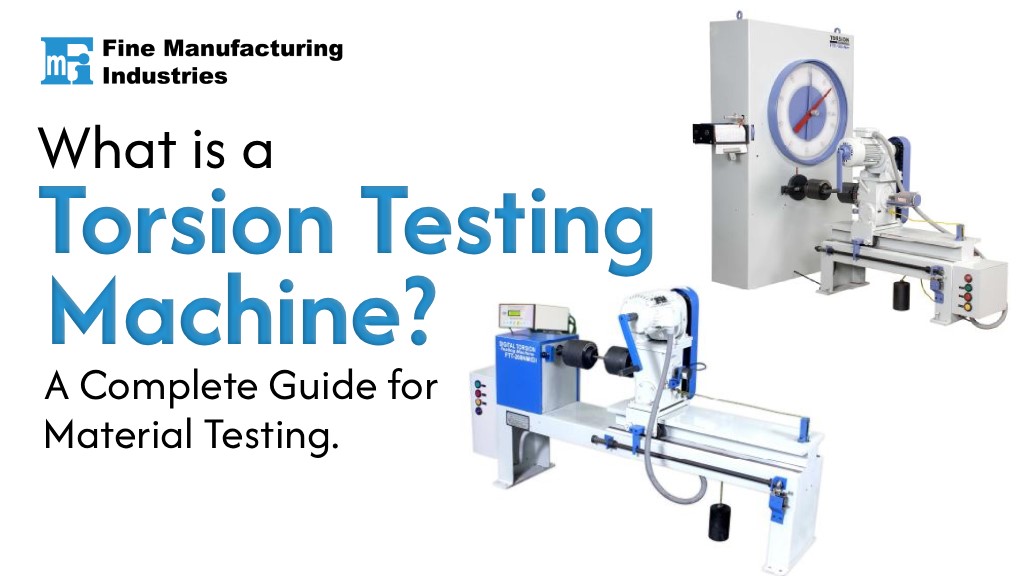
What Is a Torsion Testing Machine? A Complete Guide for Material Testing
In today's manufacturing and quality control industry, testing the strength and durability of materials is essential. Before products such as springs, wires, shafts, fasteners, medical devices, and automotive components reach the market, they must be tested to ensure they can withstand twisting forces during actual use.
A Torsion Testing Machine is specially designed to measure a material's resistance to twisting or rotational force (torque). It helps manufacturers evaluate the torsional strength, stiffness, ductility, and durability of different materials and components.
Industries such as automotive, aerospace, construction, engineering, research laboratories, educational institutions, and quality control departments rely on Torsion Testing Machines to ensure products meet international standards and deliver reliable performance.
This guide explains what a Torsion Testing Machine is, how it works, its benefits, applications, and how to select the right machine for your testing requirements.
What Is a Torsion Testing Machine?
A Torsion Testing Machine is a material testing machine used to determine how much twisting force (torque) a material or component can withstand before it deforms or fails.
During the test, one end of the specimen is securely clamped while the other end is rotated. The machine records the applied torque, angle of twist, and material behavior until the test is completed.
The results help engineers evaluate the quality, strength, and performance of materials under torsional loads.
How Does a Torsion Testing Machine Work?
The testing process is simple and highly accurate.
-
Step 1: Mount the Test Specimen The material sample is securely fixed between two grips.
Step 2: Apply Rotational Force The machine gradually applies controlled twisting force to one end of the specimen.
Step 3: Measure Torque and Twist Sensors continuously record the applied torque and the angle of twist during testing.
Step 4: Analyze Results The software displays important test parameters such as maximum torque, torsional strength, angle of twist, stiffness, and failure point.
Types of Torsion Testing Machines
Manual Torsion Testing Machine
Suitable for basic laboratory testing and educational institutions.
Best For
- • Colleges
- • Training Centers
- • Small Laboratories
Digital Torsion Testing Machine
Equipped with digital displays for accurate torque and angle measurements.
Best For
- • Quality Control Laboratories
- • Manufacturing Plants
- • Industrial Testing
Computerized Torsion Testing Machine
Integrated with advanced software for automated testing, graph generation, and report creation.
Best For
- • R&D Centers
- • Automotive Industry
- • Aerospace Industry
- • Material Research Laboratories
Specifications of Torsion Testing Machine
The specifications of a Torsion Testing Machine vary depending on the model, testing capacity, and application. However, most industrial and laboratory machines include the following standard features:
| Specification | Details |
|---|---|
| Machine Type | Manual, Digital, or Computerized Torsion Testing Machine |
| Torque Capacity | 10 Nm to 5000 Nm (or higher, depending on model) |
| Accuracy | ±1% of indicated value or better |
| Torque Measurement | Digital Load Cell / Torque Sensor |
| Angle of Twist Measurement | High-resolution Rotary Encoder |
| Display | LCD Display or Computer Software Interface |
| Control System | Manual, Servo-Controlled, or Fully Computerized |
| Testing Direction | Clockwise and Counter-Clockwise |
| Specimen Length | Customizable according to testing requirements |
| Maximum Test Diameter | Depends on machine capacity |
| Test Speed | Variable speed control |
| Power Supply | 230V AC / 415V AC, 50 Hz (Model Dependent) |
| Data Output | USB, Ethernet, or Computer Software |
| Software Features | Real-time graph, torque-angle curve, automatic report generation, data storage |
| Safety Features | Emergency stop, overload protection, limit switches, safety guard |
| Calibration | Traceable calibration as per ASTM / ISO standards |
| Standards Compliance | ASTM, ISO, DIN, BIS (where applicable) |
Benefits of a Torsion Testing Machine
- • Accurate Material Evaluation: Measures the torsional strength and durability of materials with high precision.
- • Improves Product Quality: Identifies weak materials before production, reducing defects and improving reliability.
- • Supports Quality Control: Ensures products meet customer specifications and international quality standards.
- • Enhances Product Safety: Helps manufacturers verify that components can safely withstand operational torque.
- • Easy Data Recording: Modern computerized machines automatically store and generate detailed test reports.
- • Wide Material Compatibility: Suitable for testing metals, wires, springs, rods, shafts, fasteners, plastics, and composite materials.
- • Higher Testing Efficiency: Automated systems reduce testing time while improving repeatability and accuracy.
Industries That Use Torsion Testing Machines
Torsion Testing Machines are widely used in:
- • Automotive Manufacturing
- • Aerospace Industry
- • Metal Manufacturing
- • Spring Manufacturing
- • Wire and Cable Industry
- • Medical Device Manufacturing
- • Research & Development Laboratories
- • Educational Institutions
- • Quality Control Laboratories
- • Engineering Industries
Materials Tested Using a Torsion Testing Machine
Common test materials include:
- • Steel
- • Stainless Steel
- • Aluminum
- • Copper
- • Brass
- • Titanium
- • Alloy Steel
- • Springs
- • Wires
- • Shafts
- • Fasteners
- • Plastic Components
- • Composite Materials
Applications of Torsion Testing Machines
Typical industrial applications include:
- • Spring Testing
- • Wire Testing
- • Shaft Testing
- • Fastener Testing
- • Medical Device Testing
- • Automotive Component Testing
- • Aerospace Component Testing
- • Material Research
- • Product Development
- • Quality Inspection
International Testing Standards
Reliable Torsion Testing Machines are designed to perform tests according to internationally recognized standards, including:
- • ASTM Standards
- • ISO Standards
- • DIN Standards
- • IS Standards (where applicable)
Compliance with these standards ensures accurate, repeatable, and globally accepted test results.
How to Choose the Right Torsion Testing Machine
Before purchasing, consider the following factors:
- • Maximum torque capacity
- • Material type
- • Specimen size
- • Testing accuracy
- • Digital or computerized controls
- • Data analysis software
- • Industry standards compliance
- • Calibration support
- • After-sales service
- • Future testing requirements
Selecting the correct machine improves testing accuracy, operational efficiency, and long-term return on investment.
Maintenance Tips
To maintain accurate performance:
- • Calibrate the machine regularly.
- • Inspect grips and fixtures.
- • Clean moving parts after testing.
- • Check electrical connections.
- • Update testing software.
- • Lubricate mechanical components where recommended.
- • Follow the manufacturer's preventive maintenance schedule.
Routine maintenance improves machine accuracy and extends equipment life.
Why Choose a Reliable Torsion Testing Machine Manufacturer?
A trusted manufacturer provides:
- • Precision-engineered machines
- • High-accuracy sensors
- • International standard compliance
- • Durable construction
- • Advanced testing software
- • Calibration support
- • Operator training
- • Technical assistance
- • Spare parts availability
- • Reliable after-sales service
Partnering with an experienced manufacturer ensures consistent testing performance and dependable long-term support.
Conclusion
A Torsion Testing Machine is an essential tool for evaluating the torsional strength, durability, and performance of materials and components used across modern industries. By accurately measuring torque and angle of twist, it helps manufacturers improve product quality, ensure compliance with international standards, and reduce the risk of product failure.
Whether you operate a manufacturing plant, quality control laboratory, research center, or educational institution, investing in a reliable Torsion Testing Machine enhances testing accuracy, supports innovation, and contributes to long-term business success.
Contact Us
Looking for a reliable Torsion Testing Machine for your laboratory or manufacturing facility? We offer high-precision manual, digital, and computerized torsion testing solutions designed to meet international standards. Contact our experts today to find the right testing machine for your application.
Frequently Asked Questions (FAQ)
A Torsion Testing Machine is a material testing machine used to measure the resistance of a material or component to twisting force (torque). It helps determine torsional strength, stiffness, angle of twist, and failure characteristics.
A Torsion Testing Machine securely holds the test specimen while applying controlled rotational force. It measures the applied torque and angle of twist to evaluate the material's performance under torsional stress.
The main benefits include accurate material testing, improved product quality, enhanced safety, reliable quality control, compliance with international standards, automated reporting, and higher testing efficiency.
Torsion Testing Machines are widely used in automotive, aerospace, engineering, metal manufacturing, spring production, wire and cable industries, research laboratories, educational institutions, and quality control departments.
These machines can test steel, stainless steel, aluminum, brass, copper, titanium, alloy steel, springs, wires, shafts, fasteners, plastics, and composite materials.
Select a machine based on torque capacity, specimen size, testing accuracy, software features, compliance with testing standards, calibration support, and your specific application requirements.
Regular calibration ensures accurate torque measurements, reliable test results, compliance with industry standards, and consistent testing performance.
Routine maintenance should include calibration, cleaning, inspection of grips and fixtures, lubrication (where required), software updates, and preventive servicing according to the manufacturer's recommendations.