
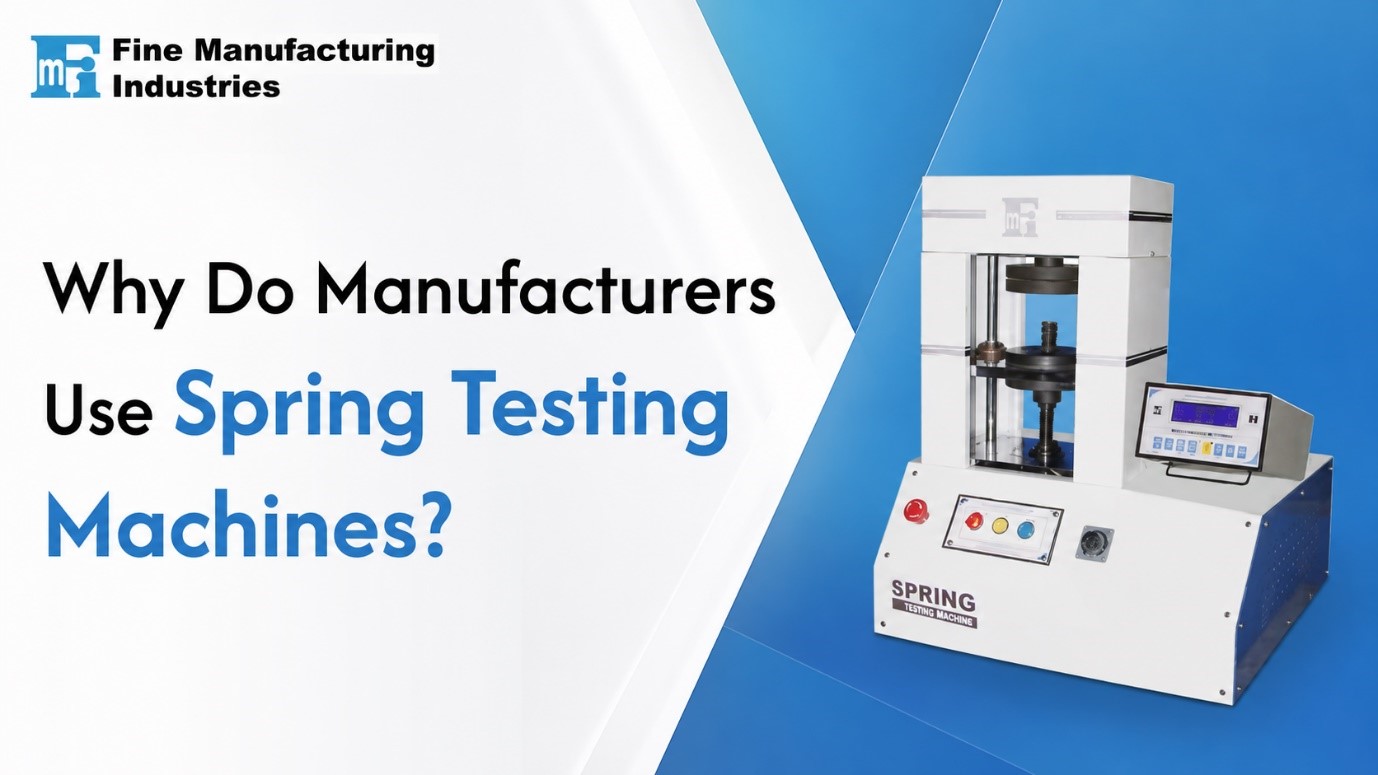
Why Do Manufacturers Use Spring Testing Machines?
A Spring Testing Machine is an essential quality control instrument used to measure the load, deflection, stiffness, and performance of compression and tension springs. Manufacturers across industries rely on these machines to ensure every spring meet design specification, safety standards, and customer expectations.
Whether producing automotive suspension springs, medical device components, industrial valves, or consumer products, accurate spring testing helps prevent failures, reduce production defects, and improve product reliability.
In this guide, we'll explain why manufacturers use Spring Testing Machines, how they work, their benefits, and the industries that depend on them.
What Is a Spring Testing Machine?
A Spring Testing Machine is a precision testing instrument designed to evaluate the mechanical performance of springs. It measures how a spring behaves under applied force by recording parameters such as load, deflection, spring rate, and return characteristics.
The machine helps manufacturers verify that each spring performs consistently before it is installed in the final product.
Why Do Manufacturers Use Spring Testing Machines?
Manufacturers use Spring Testing Machines to maintain product quality, ensure safety, and comply with industry standards.
Their primary objectives include:
- • Verify spring load capacity
- • Measure compression and tension force
- • Test spring deflection accurately
- • Calculate spring rate (stiffness)
- • Detect manufacturing defects
- • Maintain consistent product quality
- • Reduce production waste
- • Improve customer satisfaction
- • Meet international quality standards
- • Prevent premature product failures
Without accurate testing, even a small variation in spring performance can affect the reliability of the final product.
How Does a Spring Testing Machine Work?
The testing process is straightforward:
Step 1: Position the SpringThe spring is securely placed between the machine fixtures.
Step 2: Apply ForceThe machine compresses or stretches the spring at a controlled speed.
Step 3: Measure PerformanceSensors record:
- • Load
- • Deflection
- • Spring rate
- • Maximum force
- • Return characteristics
Step 4: Analyze Results
The software compares measured values with the required specifications to determine whether the spring passes or fails.
Key Benefits of Using a Spring Testing Machine
-
1. Improved Product Quality: Accurate testing ensures every spring meets design requirements before shipment.
2. Better Quality Control: Manufacturers can identify defective springs during production instead of after assembly.
3. Increased Safety: Critical applications such as automotive braking systems, medical devices, and aerospace equipment require highly reliable springs.
4. Reduced Manufacturing Costs: Detecting defects early minimizes scrap, rework, warranty claims, and downtime.
5. Higher Customer Satisfaction: Consistent spring performance improves the quality and reliability of finished products.
6. Compliance with Standards: Testing supports compliance with customer specifications and recognized quality standards.
Industries That Use Spring Testing Machines
Spring Testing Machines are widely used in:
- • Automotive Manufacturing
- • Aerospace Industry
- • Medical Device Manufacturing
- • Electrical and Electronics
- • Industrial Machinery
- • Consumer Products
- • Railway Equipment
- • Defense Manufacturing
- • Valve Manufacturing
- • Tool Manufacturing
- • Precision Engineering
- • Research and Development Laboratories
Types of Springs Tested
A Spring Testing Machine can test:
- • Compression Springs
- • Tension Springs
- • Extension Springs
- • Torsion Springs
- • Disc Springs
- • Custom Industrial Springs
This versatility makes it suitable for diverse manufacturing environments.
Applications of Spring Testing Machines
Common applications include:
- • Incoming material inspection
- • In-process quality control
- • Final product inspection
- • Research and development
- • Prototype validation
- • Production testing
- • Failure analysis
- • Calibration and verification
Features of Modern Spring Testing Machines
Modern systems often include:
- • Digital load display
- • High-accuracy load cells
- • Automatic data acquisition
- • Touchscreen interface
- • Real-time graph generation
- • USB and PC connectivity
- • Report generation
- • Programmable test methods
- • Multiple unit selection
- • High repeatability
These features improve productivity and traceability.
How to Choose the Right Spring Testing Machine
Before purchasing, consider:
- • Spring type
- • Maximum load capacity
- • Testing accuracy
- • Measurement range
- • Test speed
- • Software capabilities
- • Data reporting requirements
- • Calibration support
- • Applicable industry standards
- • After-sales service
Selecting the right machine improves testing efficiency and long-term value.
Maintenance Tips
To maintain accuracy:
- • Calibrate the machine regularly.
- • Keep fixtures clean.
- • Inspect load cells periodically.
- • Avoid overloading the machine.
- • Update testing software when required.
- • Store the equipment in a clean environment.
- • Follow the manufacturer's maintenance schedule.
Preventive maintenance ensures reliable results and extends equipment life.
Why Choose a High-Quality Spring Testing Machine?
A reliable Spring Testing Machine offers:
- • High measurement accuracy
- • Consistent testing results
- • Faster inspection cycles
- • Reduced quality defects
- • Improved production efficiency
- • Compliance with industry requirements
- • Long service life
- • Lower operating costs
Investing in quality testing equipment protects both your products and your reputation.
Conclusion
Manufacturers use Spring Testing Machines because they play a critical role in ensuring product quality, safety, and consistency. By accurately measuring spring load, deflection, and spring rate, these machines help identify defects before products reach customers.
From automotive and aerospace to medical and industrial manufacturing, Spring Testing Machines are essential for maintaining high production standards, reducing costs, and delivering reliable products. Choosing a precision testing machine from a trusted manufacturer is a smart investment for long-term manufacturing success.
Contact Us
Looking for a high-precision Spring Testing Machine for your quality control laboratory or production facility? Our experts can help you select the ideal solution for compression, tension, and spring rate testing. Contact us today for technical guidance, customized testing solutions, and dependable equipment designed for accurate and repeatable results.
Frequently Asked Questions (FAQ)
A Spring Testing Machine is a precision testing instrument used to measure the load, deflection, spring rate, and stiffness of compression, tension, and extension springs. It helps manufacturers ensure that springs meet quality and performance standards.
Manufacturers use Spring Testing Machines to verify spring quality, improve product reliability, reduce manufacturing defects, ensure consistent performance, and comply with industry standards before products reach customers.
Spring Testing Machines are widely used in the automotive, aerospace, medical device, electronics, railway, industrial machinery, valve manufacturing, consumer products, and research & development industries.
A Spring Testing Machine can test various types of springs, including:
- • Compression Springs
- • Tension Springs
- • Extension Springs
- • Torsion Springs
- • Disc Springs
- • Custom Industrial Springs
A Spring Testing Machine measures important parameters such as load, deflection, spring rate (stiffness), free length, compressed length, maximum force, and displacement to evaluate spring performance.
Choose a Spring Testing Machine based on factors such as spring type, maximum testing load, testing accuracy, measurement range, software features, automation level, reporting capabilities, and applicable testing standards.
For accurate and reliable test results, a Spring Testing Machine should be calibrated at least once a year or according to the manufacturer's recommendations and your organization's quality management system.
Digital Spring Testing Machines offer high accuracy, automatic data recording, real-time graphs, faster testing, report generation, improved repeatability, and easy integration with quality management systems.